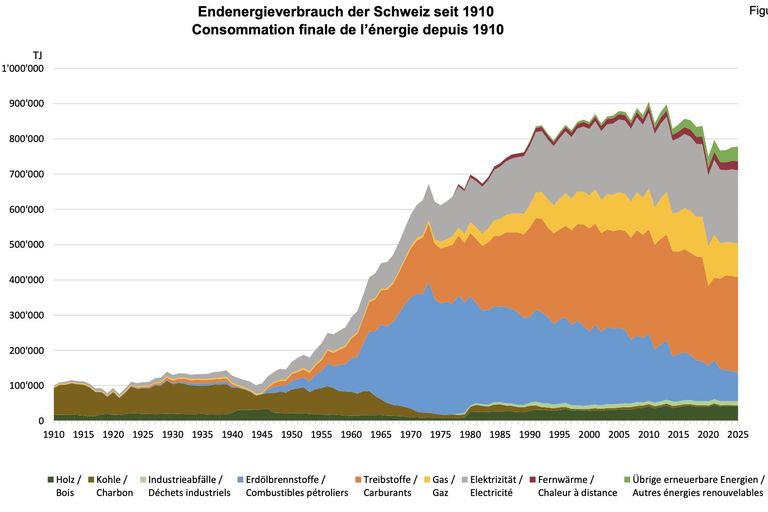
Slight rise in energy consumption in 2025
In 2025 Switzerland’s final energy consumption increased by 0.2% year-on-year to 777,870 tera-joules (TJ). The main reasons for this were the colder weather compared to the previous year and the increase in aviation fuel sales.
Immagine: BFECall: projects to reduce greenhouse gas emissions
For the second time, the University of Bern is launching the “Ready to Reduce” ideas competition to support concrete projects aimed at reducing greenhouse gas emissions.
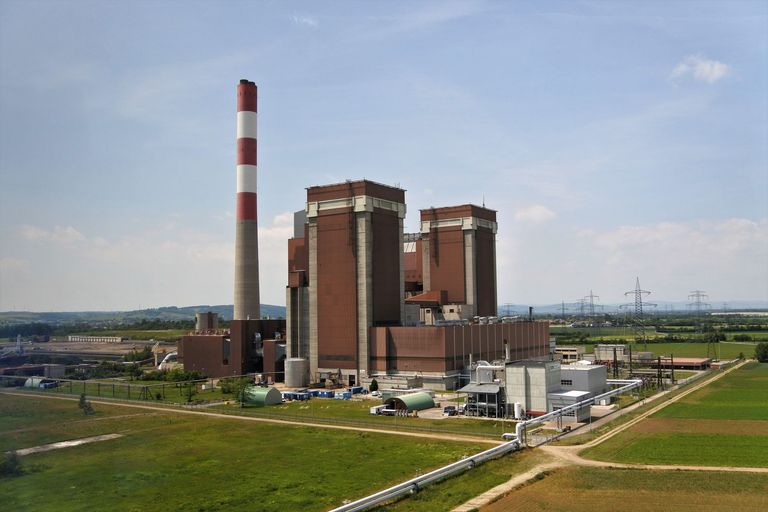
Le Conseil fédéral soumet au Parlement le message concernant le financement de centrales de réserve
Le Conseil fédéral prévoit la mise à disposition de nouvelles centrales de réserve, qui devront être fonctionnelles à partir de 2030 environ pour une période de 15 ans. À cet effet, il demande au Parlement un crédit de quelque 2,3 milliards de francs pour la construction ainsi que la mise à disposition des centrales de réserve. Les dépenses correspondant aux crédits demandés n’ont aucune incidence sur les finances de la Confédération. Lors de sa séance du 12 juin 2026, le Conseil fédéral a approuvé le message concernant l’arrêté fédéral relatif au financement de centrales de réserve.
Immagine: haunolda / pixabay
Call for papers: Drought Dynamics and Futures in Mountain Regions
With this focus issue, MRD aims to contribute to a better understanding of the dynamics of drought in mountains and its impacts on communities and ecosystems in highlands and lowlands. We seek contributions that offer insights into the complex and cascading effects of drought, bridge disciplinary boundaries, and provide actionable knowledge for coping with drought and water scarcity in mountain regions worldwide.
Immagine: MRD
WMO: Prepare for El Niño
Fueled by unusually warm ocean waters in the tropical Pacific, El Niño conditions are developing and are set to influence global temperature and rainfall patterns, increasing the risk of extreme weather over the coming months, according to the World Meteorological Organization.
Immagine: WMO
Swiss Quantum Call 2026
The call, implemented by the Swiss National Science Foundation, is aimed at researchers in the field of quantum science and technology. Funding is provided for scientifically outstanding projects with clear societal and technological benefits.
Immagine: OJB Quantum auf Wikimedia