



ProClim Flash 82: Klimafinanzierung
Image: Stefan Bohrer1/15- News
Checking in with… Jochen Markard
Image: ETH Zürich2/15Meeting Report 26th Swiss Global Change Day
Image: A. Jordi, SCNAT3/15- 2026
- Report
Spotlight on climate in Switzerland 2026
Image: ProClim4/15- 2025
- Report
Saisonale Energiespeicherung im Überblick (Grundlagenbericht)
Image: CC-BY-NC-ND5/15- 2025
- Magazine
ProClim Flash 81: Entnahme und Speicherung von CO₂ – Aktueller Stand und Potenzial neuer Methoden
Image: Climeworks6/15- Press release
Zukunftsbilder zeigen klimaneutralen Kanton Luzern
Image: Patricia Binggeli, Gemeinde Emmen7/15- 2025
- Magazine
ProClim Flash 80: Eine Frage von Recht und Gerechtigkeit – die Rolle der Justiz im Klimawandel
Image: Miriam Künzli / Greenpeace8/15- News
Checking in with… Regina Betz
Image: Die Volkswirtschaft9/15- News
How is the Graz Charter changing climate communication in the DACH region?
Image: SCNAT10/15- News
62nd Plenary Meeting of the Intergovernmental Panel on Climate Change: The Area of Tension between Science and Politics
Image: IISD-ENB - IPCC62 - Switzerland - Anastasia Rodopoulou11/15- News
Checking in with… Géraldine Pflieger
Image: Andres Jordi, SCNAT12/15- 2024
- Factsheet
Grosse Risiken und offene Fragen bei der Veränderung der Sonneneinstrahlung als Klimamassnahme
13/15- News
Zukunftsbilder für einen klimaneutralen Kanton Luzern
Image: Johan Nöthiger14/15- 2024
- Report
Ausbau erneuerbarer Energien biodiversitäts- und landschaftsverträglich planen
15/15
News
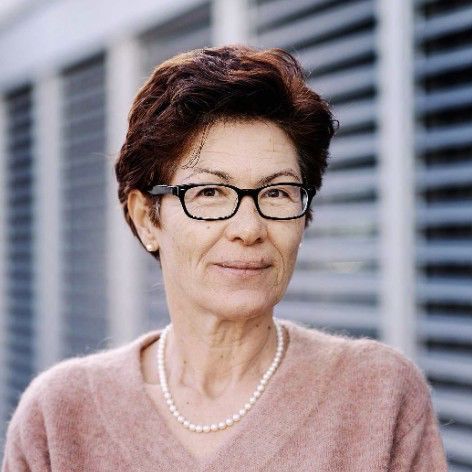
How global warming shapes conflict and cooperation
Armed conflicts are on the rise worldwide. What role does climate change play in these conflicts, and how do wars and violence affect climate change, as well as societies’ ability to cope with climate impacts? We spoke with Vally Koubi, Professor at the University of Bern and ETH Zurich, whose research focuses on the social consequences of climate change.

Newsletter on climate and energy No 05
The Newsletter on climate and energy provides monthly updates on current developments in research, policy and practice in the fields of climate and energy. It brings together scientific publications, presents relevant news, and highlights events and calls. The newsletter is aimed at professionals as well as anyone interested in climate and energy topics.
Image: David J.
Checking in with… Jochen Markard
During its spring session, the Council of States voted in favour of the indirect counter-proposal to the Blackout Initiative. The construction of new nuclear power stations is to be permitted once again in Switzerland. Jochen Markard is co-author of the report “Prospects for Nuclear Energy in Switzerland” and provides an overview of the latest findings and developments in the field of nuclear energy.
Image: ETH Zürich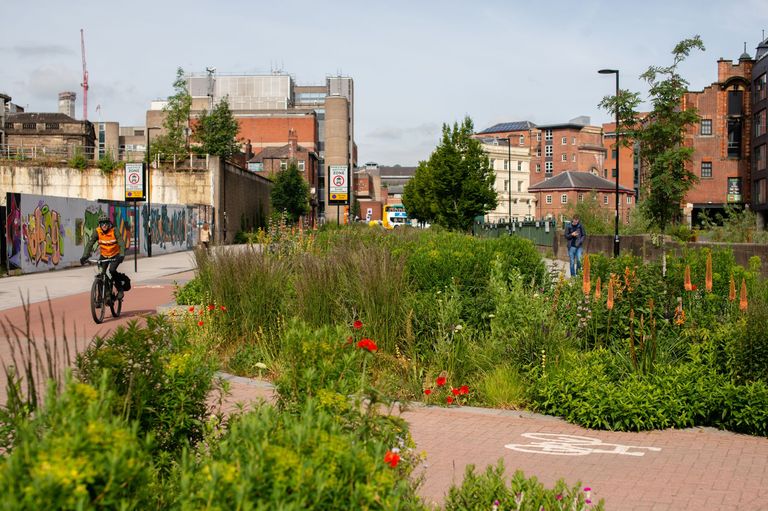
Inside the IPCC Cities Report
The IPCC is currently looking for experts to review the IPCC Special Report on Climate Change and Cities, which will be published next spring. Maybe, you could be a reviewer, too: anyone with the relevant expertise can register, no matter whether you are an academic, government member, city administrator, or NGO worker. Never fully understood the IPCC process ? Unsure how to participate ? Or simply curious what this new report will be all about ? Then continue reading.
Image: Alastair Johnstone / Climate Visuals
Save the date: Forum Klima Schweiz 2026
Das dritte «Forum Klima Schweiz – Umgang mit dem Klimawandel» findet am 29. Oktober 2026 im Zentrum Paul Klee in Bern statt. Es steht unter dem Motto «Entscheidungsgrundlagen für die Anpassung». Im Zentrum steht der Abschluss des Programms NCCS-Impacts mit der Präsentation und Diskussion der wichtigsten Resultate.
Image: NCCSContact
SCNAT
Forum for Climate and Global Change (ProClim)
House of Academies
PO Box
3001 Bern
Switzerland
News from the network
The Environment Shapes Security
Global environmental changes such as climate change, biodiversity loss and the increasing pollution of ecosystems are key security risks. They endanger people, societal stability, economic performance and the ability of states to act. It is therefore imperative that these issues be given priority in both national and international security strategies.
Image: WBGUEarth System Tipping Points
The Brief stresses that tipping of any major Earth system would have catastrophic impacts on humans and the planet. The interaction of these systems can lead to destabilising cascades, meaning that irreversible change can spread from one Earth sub-system to many. Even without crossing tipping points, major societal impacts of climate change are already occurring and likely to become more intense and widespread. Emerging scientific evidence around Earth system tipping points increases the urgency of climate change mitigation while also prioritizing resilience and adaptation strategies. Tipping points require approaches that can better anticipate risks and make decisions even when there is a high level of uncertainty. Building capacities to gather and synthesize a wide range of scientific information about Earth system change will help leaders balance the risks of different climate and environment pathways.
Image: United Nations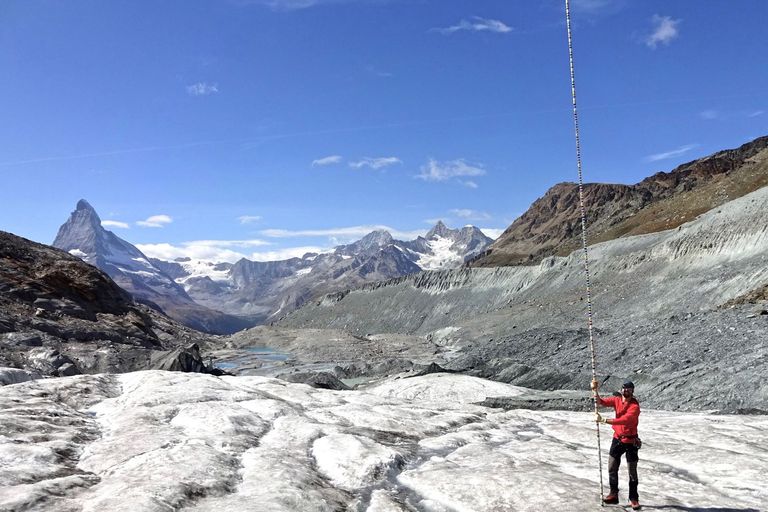
Swiss glaciers have exhausted their snow reserves
From 29 June onwards, Switzerland’s glaciers will have exhausted their snow reserves. Every litre of meltwater now causes them to lose mass – this is Glacier Loss Day. Between the extreme years of 2003 and 2022 alone, 200 square kilometres of ice – an area almost as large as the canton of Zug – have disappeared. This is reflected in the volume of meltwater, as analyses show: although ice loss was more severe in the summer of 2022 than in 2003, less water flowed off the glaciers.
Image: Matthias Huss
Klima à la carte
Unter dem Motto «Klima à la carte» verbindet die Stadt Zürich mit Partnerorganisationen und der Zürcher Gastronomie kulinarischen Genuss mit einer nachhaltigen Ernährung.
Image: © Stadt Zürich
Workshop: Climate Change and Animal Ethics
Climate change raises urgent questions of justice. Yet nonhuman animals remain an extremely neglected group within dominant climate justice frameworks, despite being among the most vulnerable to climate-related harms. Habitat loss, extreme weather events, ecosystem disruption, ocean acidification, and biodiversity collapse due to climate change profoundly affect wild and domesticated animals alike.
Image: Public Domain, flickr.com