How global warming shapes conflict and cooperation
Checking in with… Vally Koubi
Armed conflicts are on the rise worldwide. What role does climate change play in these conflicts, and how do wars and violence affect climate change, as well as societies’ ability to cope with climate impacts? We spoke with Vally Koubi, Professor at the University of Bern and ETH Zurich, whose research focuses on the social consequences of climate change.
Sol Kislig (ProClim): Globally, a rise in armed conflict can be observed. How do climate and weather extremes influence conflict risks?
Vally Koubi: The relationship between climate change and conflict remains one of the most debated questions in the climate-security literature – partly because it is very easy to overstate the role of climate and partly because its effects are highly context-dependent. The broad scientific consensus today is that climate change should not be understood as a direct or deterministic cause of war. Rather, climate change acts as a “risk multiplier”, intensifying existing social, economic, and political pressures that may contribute to instability or violence.
For example?
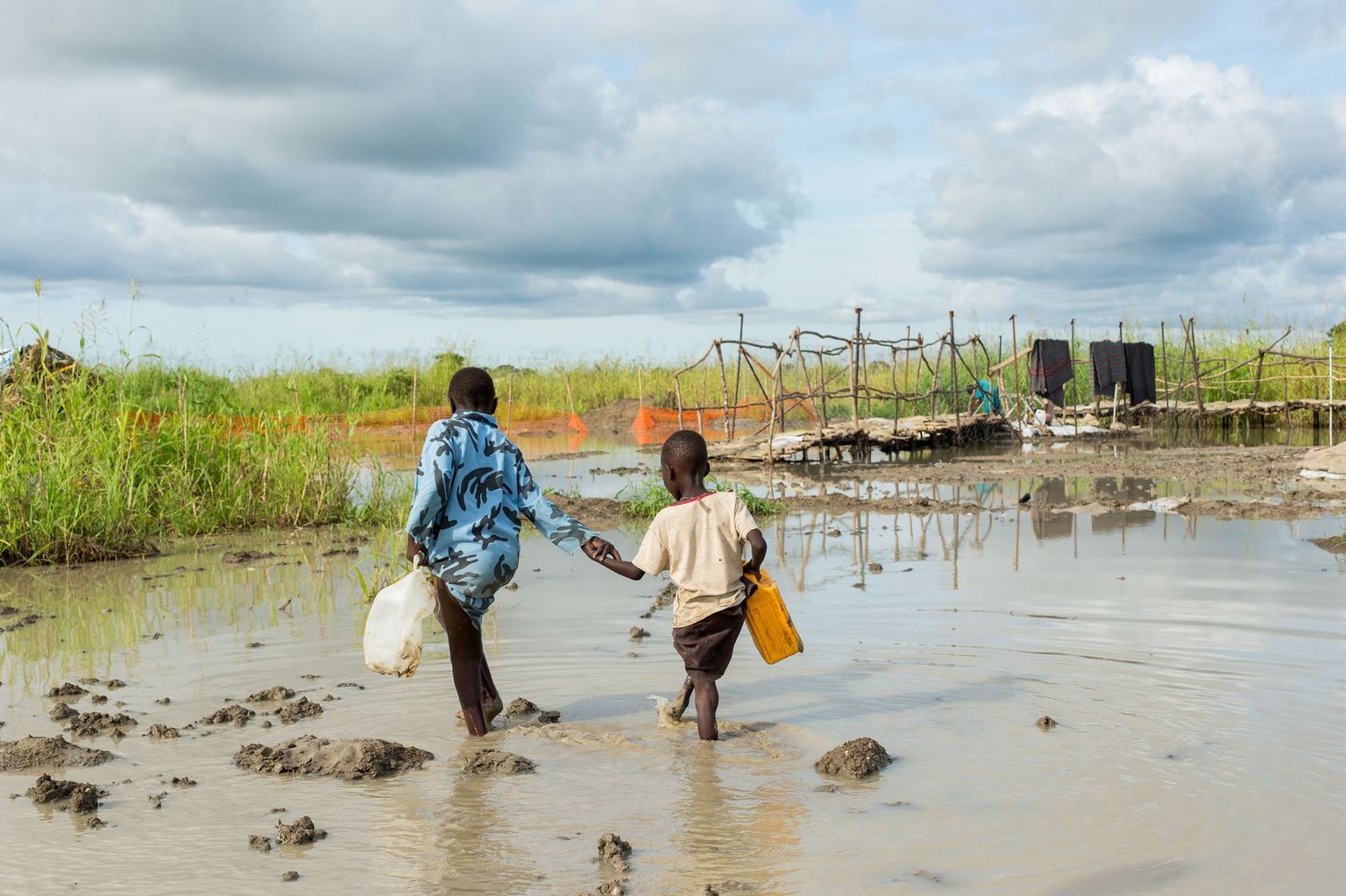
Droughts, floods, heatwaves, and storms can reduce agricultural production, undermine livelihoods, increase food insecurity, damage infrastructure, and weaken local economies. Where large parts of the population depend on rain-fed agriculture or natural resources, these impacts can become socially and politically destabilizing. Economic hardship may increase grievances, weaken trust in state institutions, and make joining armed groups or engaging in violence more attractive. Climate-related displacement and migration can also create tensions.
„ (..) climate change acts as a “risk multiplier”, intensifying existing social, economic, and political pressures (…)”
At the same time, climatic stress does not produce violence everywhere. Similar extreme weather events can have very different consequences depending on factors as political institutions, inequality or previous histories of violence.
It is therefore important to be cautious when discussing whether wars are globally becoming more frequent because of climate change. Many societies adapt without major violence, but in fragile settings climatic shocks may interact with pre-existing tensions and increase the risk of violent escalation. The strongest evidence concerns localized violence, communal conflict, and insecurity in already fragile contexts rather than a global increase in interstate or civil wars driven primarily by climate change.
Will this relationship change in the future as climate change and its consequences intensify?
Many scholars expect climate-related risks to become more important as global warming intensifies. Future climate change is likely to increase the frequency and severity of heat extremes, droughts, flooding, and displacement pressures, which may further exacerbate vulnerabilities in societies already under stress.
How vulnerable to climate change are conflict-affected regions?
There is a very strong overlap between regions affected by conflict and regions highly vulnerable to climate change. This overlap is not accidental. Armed conflicts damage infrastructure, services, and institutions, making it harder for societies to cope with climate stress. As a result, conflict-affected populations are often among the least capable of adapting to climate extreme events. In the climate-security literature, this dynamic is often described as a “vicious circle”: Climate impacts can contribute to instability under certain conditions, while conflict in turn increases future vulnerability to climate risks.
“Conflict-affected populations are often among the least capable of adapting to extreme climate events (…)”
This pattern is visible in several regions including the Sahel, parts of the Horn of Africa, Afghanistan, Yemen, and Syria. For example, prolonged droughts may intensify food insecurity or displacement pressures, but whether these pressures translate into conflict depends heavily on political and institutional conditions. This is why many researchers caution against labeling such cases as “climate wars.”
At the same time, it is important not to portray vulnerable societies as passive victims of climate change. Many communities exposed to both environmental stress and insecurity develop sophisticated local coping strategies and forms of resilience.
Can advancing climate change also promote conflict resolution and peace?
This is a more difficult question, partly because the research on climate and cooperation is still less developed than the literature on climate and conflict. Public debates often focus heavily on the risks of “climate wars,” while paying less attention to the possibility that environmental stress can also foster cooperation, solidarity, or collective action. Shared exposure to floods or droughts may encourage communities to coordinate responses, pool resources, and strengthen mutual support. This can occur through local disaster response, resource management, adaptation initiatives, or other forms of collective action.
„Climate-related hazards can, under some conditions, create incentives for cooperation. (…) Some studies also suggest that natural disasters can temporarily reduce intergroup tensions or create openings for dialogue and cooperation.”
In my own recent research in Bangladesh, we examine how communities exposed to severe flooding and riverbank erosion respond socially to environmental stress. We find that severe hazard impacts are more consistently associated with increased cooperation than with conflictual behavior. Affected households are more likely to provide financial help, shelter, and support to others, including not only fellow villagers but in some cases also people from outside the community.
At the same time, the findings are not simply optimistic. Environmental stress can also produce insecurity, especially under conditions of low trust or social exclusion. In our research, support for violence increases primarily among individuals who report low levels of generalized trust or who feel socially marginalized. This suggests that climate-related stress does not push societies uniformly toward either conflict or cooperation. Cooperative outcomes require institutions and social relations that allow collective responses to emerge. Trust, inclusion, and perceptions of fairness are particularly important in this regard.
Can climate action also influence conflicts?
Climate action itself can also become politically contested if people perceive it as unfair. The transition to a low-carbon economy requires major changes across different sectors of society and economy. These changes inevitably create winners and losers. Mitigation and adaptation measures need to consider who benefits, who bears the costs, who is displaced, and who has a voice in the process.
„Inclusive institutions, compensation mechanisms, local participation, and attention to inequality are not merely ethical add-ons; they are central to whether climate action strengthens social resilience or creates new lines of conflict.“
How can conflicts triggered or exacerbated by climate change be resolved peacefully?
To prevent climate-related conflict, societies must address the underlying causes of vulnerability. Inclusive institutions, compensation mechanisms, local participation, and attention to inequality are not merely ethical add-ons; they are central to whether climate action strengthens social resilience or creates new lines of conflict. Climate adaptation cannot be separated from questions of justice, participation, and state capacity.
A second priority is to break the “vicious circle” between conflict, vulnerability, and climate impacts. Peacebuilding and climate adaptation should be integrated: rebuilding institutions, restoring basic services, supporting food and water security, and strengthening local dispute-resolution mechanisms are also forms of climate-risk reduction.
Finally, climate policy itself must be conflict-sensitive. The challenge is to not simply incorporate climate concerns into peacebuilding, but to design climate action in ways that reduce rather than reproduce inequality.
How do wars directly influence CO₂ emissions – and what are the implications for climate protection?
Wars contribute to climate change through military emissions and environmental damage. Of course, military operations consume large amounts of fossil fuel. Fighting can destroy ecosystems, infrastructure, and natural resources, often with long-lasting consequences.
Reconstruction is also highly carbon-intensive, although it may create opportunities for more sustainable infrastructure. While wars can temporarily reduce emissions by disrupting economic activity, these effects are usually short-lived and come at enormous human and environmental costs.
Indirectly, conflict can undermine climate action by diverting (public) resources and shifting political attention, encouraging global rearmament, weakening international cooperation, and increasing vulnerability to future climate risks. Although crises may sometimes accelerate renewable energy investments, they can also reinforce fossil-fuel dependence.
Overall, conflict is not only a security challenge but also a climate-governance problem. It can increase environmental degradation, weaken adaptation capacity, and divert resources away from climate action, making societies more vulnerable to future climate risks.